Virtual and Augmented Reality in the Football World
By Awni Elhalhuli| January 5, 2020
The Position of VR & AR
Virtual and Augmented Reality are becoming increasingly popular throughout the world. It has attracted major industries to take note and begin to introduce it within their markets and help enhance their brands. The sporting industry is one of the largest globally in terms of value and one sport in particular tends to stand out from the rest. Football is the most popular sport in the world with 4 billion followers and second is Cricket with 2.5 billion followers.

Early March 2019, Satista released statistics about the growth of Virtual and Augmented reality. It was founded that the revenue in the VR and AR market racked up 16.8bn USD in 2019. Virtual and Augmented Reality have seen success within industries, mainly gaming. AR has seen one of the highly noted victories within this industry, due to the rise of Pokémon Go. The stats as a result of the release of Pokémon Go are outstanding, within the first month of release (2016), it gained a record $207 million and worldwide it had 45 million active players. There are huge strides being made with AR, especially with the introduction of Microsoft’s ‘Hololens’.
Due to the proven success of VR and AR implementation, what’s to say that the football industry can’t adopt these technologies and upgrade the fan experience of their events?
What can these technologies do to help Football Fan Engagement?
As a result of the large pool of fans associated with football, there is a huge opportunity to not only make a large amount of revenue but also to engage more fans globally. VR has already been used in football but not to its full potential. Jamie Carragher, a Sky Sports football pundit, is one figure who is known to have used VR to analyse certain moments in football matches. This is to help the viewer gain a better knowledge of why footballers make certain decisions. This will help enhance the fan’s experience and allow them to feel in the moment, just like the football player.
https://platform.twitter.com/widgets.js🕶️ @Carra23 on the virtual reality…
— Sky Sports MNF (@SkySportsMNF) September 16, 2019
How could Man City have stopped Norwich’s opening goal this weekend? pic.twitter.com/5oKgouwrZc

Imagine watching a football match, whilst using a Virtual reality headset from the comfort of your own home! Just think that you could experience the infamous Manchester Derby on your sofa, as if you were there in the stands, in the heat of the moment. Virtual reality technology in general has positives as it allows the user to experience the world in a new way and go to places all over the world. However, where there are positives, there will be negatives! As a result of this I believe this technology should be made a possibility due to many fans around the world missing out on going to sporting events and not experiencing the traditional match day.
In addition, with the rise of the Virtual Reality technologies, they can help with major footballing events such as the “Champions League”. Recently the competition’s viewing figures have declined by a surprising 35%, maybe Virtual reality can assist with raising the viewership as it will offer something new and innovative. The decline of football fans watching the Champions League could be a result of people ultimately just getting bored of the usual watching of a football match. VR can make it exciting again by offering a total new experience.
How should this technology be introduced?
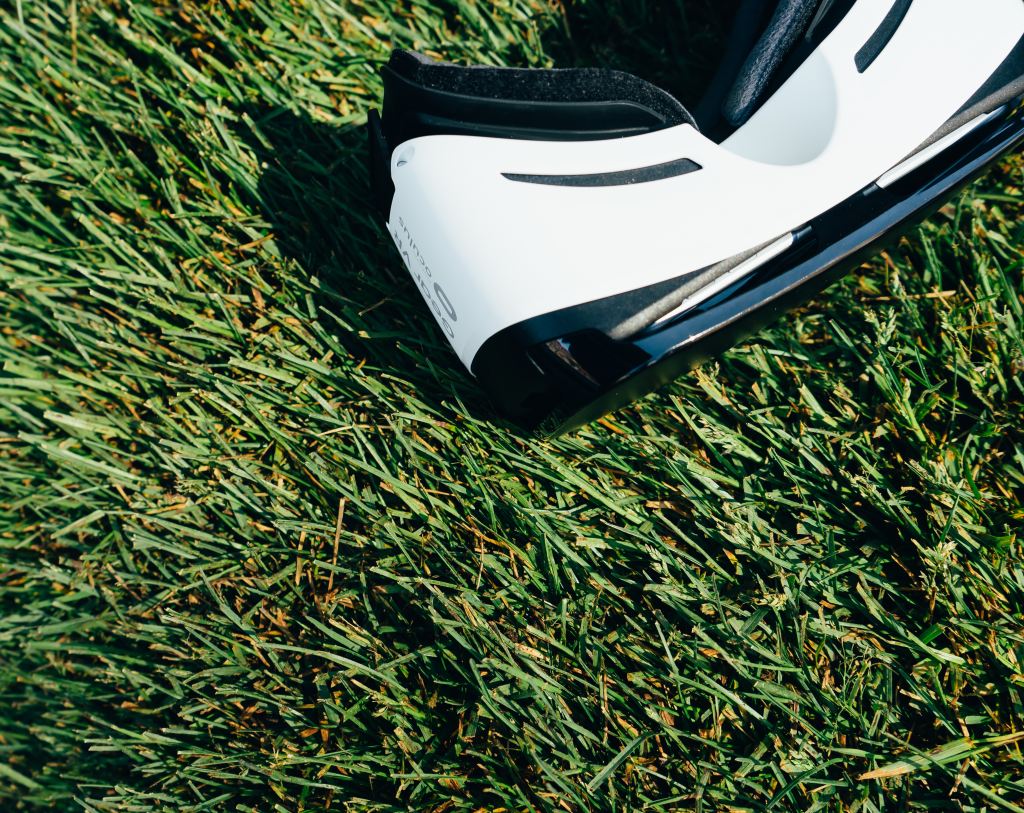
How can VR football matches become a reality? I hear you ask. It most certainly will be costly for clubs who wish to introduce this technology to their fans, as they would have to fund the relevant equipment to make it possible.
Consequently, this service provided by football clubs will be a cost for the customers in the form of a supposed ‘e-ticket’ and of course the VR headset. Just like any other business, football clubs will want to make revenue and indeed profits. However, dependent on the status of the market, economic factors will become present, such as Price Elasticity of Demand (PED).
Has this been tried before?
Watching football matches with a Virtual reality headset has been tried out before. Most notably at FIFA World Cup 2018 in Russia. The broadcasting organisation that provided this was the BBC, in which they created an app called “The BBC Sport VR 2018 FIFA World Cup app”. They broadcast-ed all 33 live games including the World cup final in Virtual reality. The BBC had received positive feedback for their efforts and they showcased the potential of VR in football.
As beneficial as this was, there has been little activity watching games with VR, especially within the Premier League. The closest we have come has been from Manchester City on YouTube, uploading highlights of games in Virtual reality.
Due to the vast size of the Premier League, in depth analysis has been conducted on its viewing figures, outlining the different demographics and how viewers watch the Premier League.
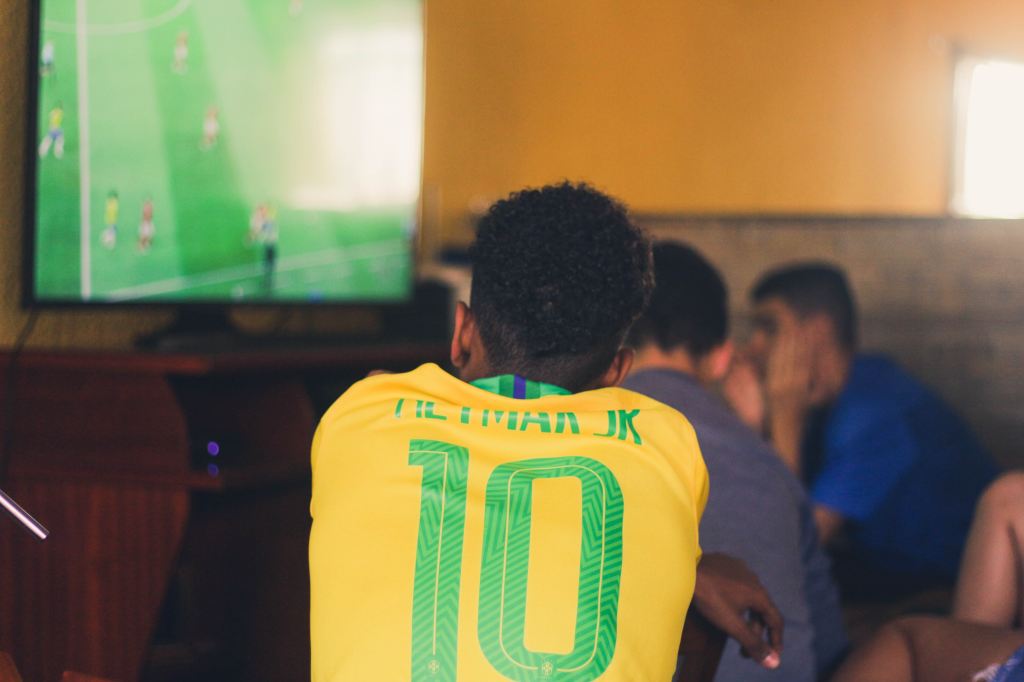
There may be one reason why we have not seen a strong push for watching matches in Virtual reality within the Premier League. It could be the disagreement of the idea from the Football Association, otherwise known as the FA. The FA may feel that a fan watching in VR may become isolated and would much rather them watch games with a group and experience it in that way.
A similar instance happened within the NFL and their Super Bowl as they were contemplating introducing it.
Where is Augmented Reality in all of this?

Augmented reality can play a big role in making fan engagement better and improve it in many ways. Football clubs such as Chelsea most notably have taken advantage of Augmented reality and created an app for the fans in the name of “Chelsea Kicker”. These types of implementations can significantly improve the fan experience and give it another dimension.
Manchester City offer an AR experience through their match day programmes, as you can watch below.
That nicely brings us to a close. Do you think Virtual and Augmented reality can have a positive impact on football and can these ideas truly enhance the fan’s experience?
Contact Me
A.O.Elhalhuli@edu.salford.ac.uk
 Virtual and Augmented Reality in the Football World